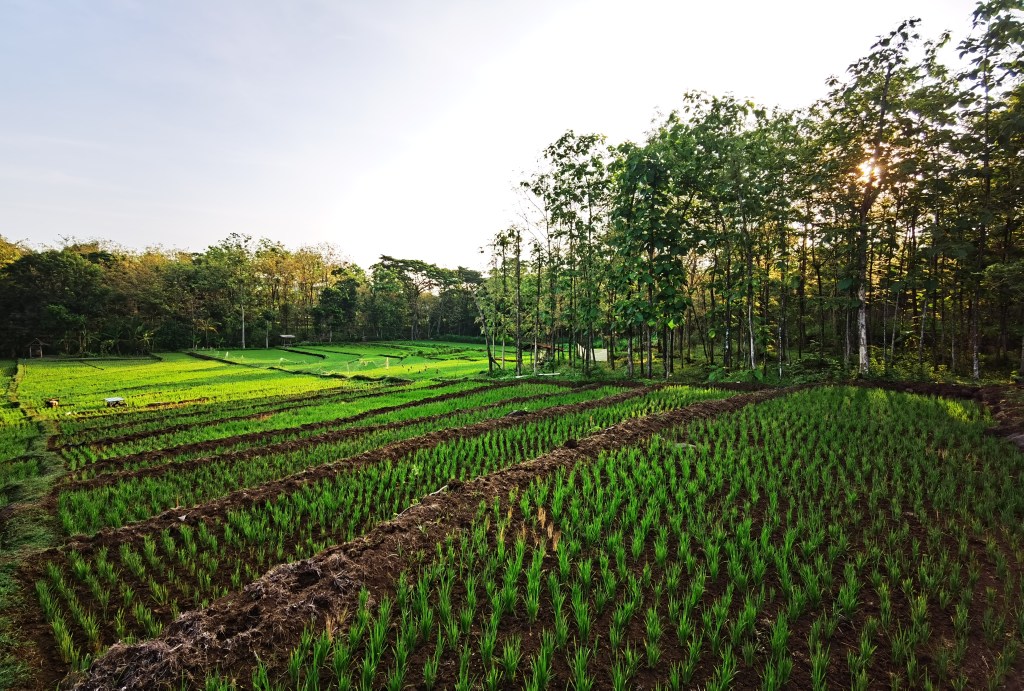
Rain-fed agriculture plays a pivotal role in global food production, contributing significantly to the sustenance of communities worldwide. Despite its undeniable importance, there has been a historical oversight in recognizing the impact of rain-fed crops on water resources. This oversight is, to some extent, understandable, as rain-fed crops inherently replace natural vegetation, which itself consumes water. As a result, the utilisation of green water in rain-fed agriculture may not always be perceived as a direct influencer of the overall water budget on a global scale.
Sukoharjo Regency’s land utilisation encompasses 44.18% (20,617 ha) dedicated to paddy fields, with an additional 8.89% (1,834 ha) allocated to rain-fed paddy fields. The latter, reliant on rain-fed irrigation, encounters challenges during the dry season due to constrained water availability. The predominant constraint affecting rain-fed paddy fields is the diminished paddy productivity when juxtaposed with irrigated fields, a discrepancy largely influenced by the variability in rainfall patterns.
In regions characterized by a humid climate, a common agricultural practice involves cultivating crops such as corn, cassava, or sweet potato in rain-fed paddy fields. This cultivation is typically undertaken in rotation after paddy, wherein paddy is grown during the rainy season, followed by the cultivation of non-paddy crops during the relatively drier season. In areas where irrigation is accessible, farmers often opt for the cultivation of two or more paddy crops annually.
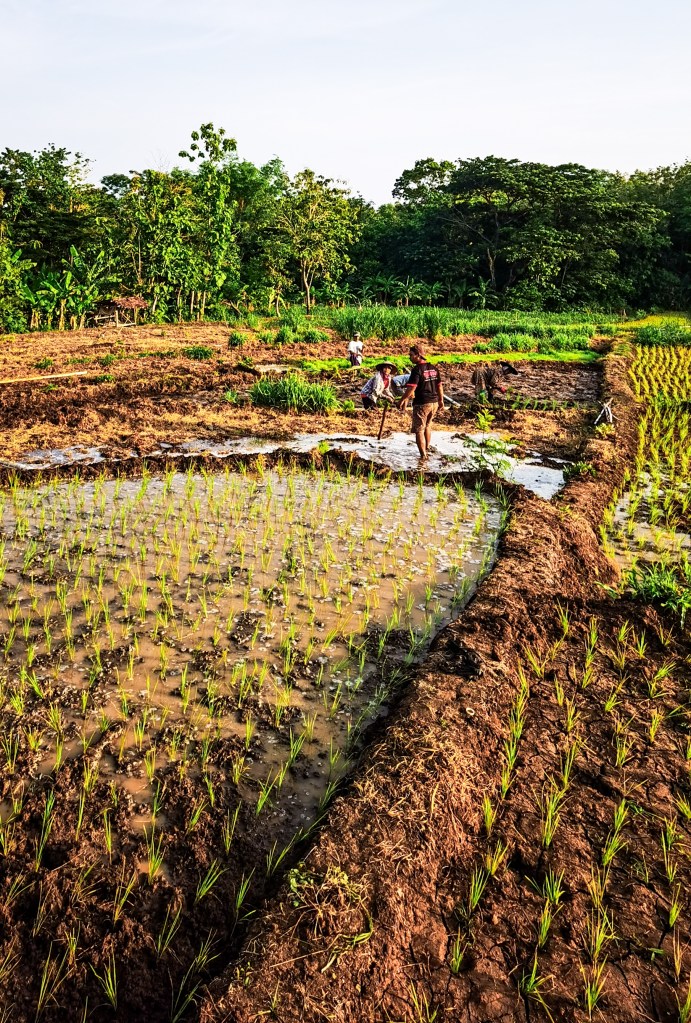
During the planting season, farmers engaged in paddy cultivation utilised river water for irrigation through pumping mechanisms. Despite certain farmers’ initiatives to construct wells with a depth of 15 meters, inadequate water availability persists, attributable to constraints in groundwater sources and precipitation levels. In the lowland of Sukoharjo, the cultivation of horticultural crops is restricted, leading to a prevalent transition towards teak plantation. This shift is driven by the advantageous characteristic of teak, which requires minimal care and attention, making it well-suited for survival in the challenging local environment.
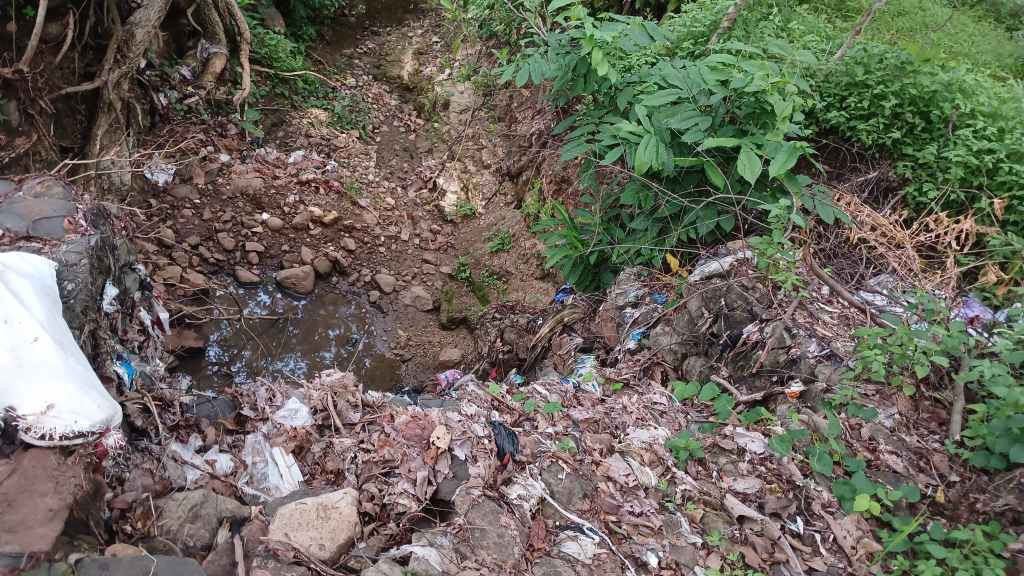
External factors, notably the perpetuation of traditional farming technology, play a substantial role in fostering sub-optimal farming practices within rain-fed paddy fields. The associated risks of cultivation in such fields encompass challenges related to infertile or nutrient-poor soil conditions, diminished oxygen levels, modified redox potential, and alterations in soil pH induced by waterlogging. These factors collectively exert a pronounced influence on nutrient dynamics and availability, directly impacting the growth and development of paddy plants.
The fundamental characteristic of Vertisols lies in their composition, characterized by a notable presence of expanding clay and the development of deep, wide cracks during certain periods of the year. These soils exhibit a propensity to contract upon drying and expand upon becoming wetter.
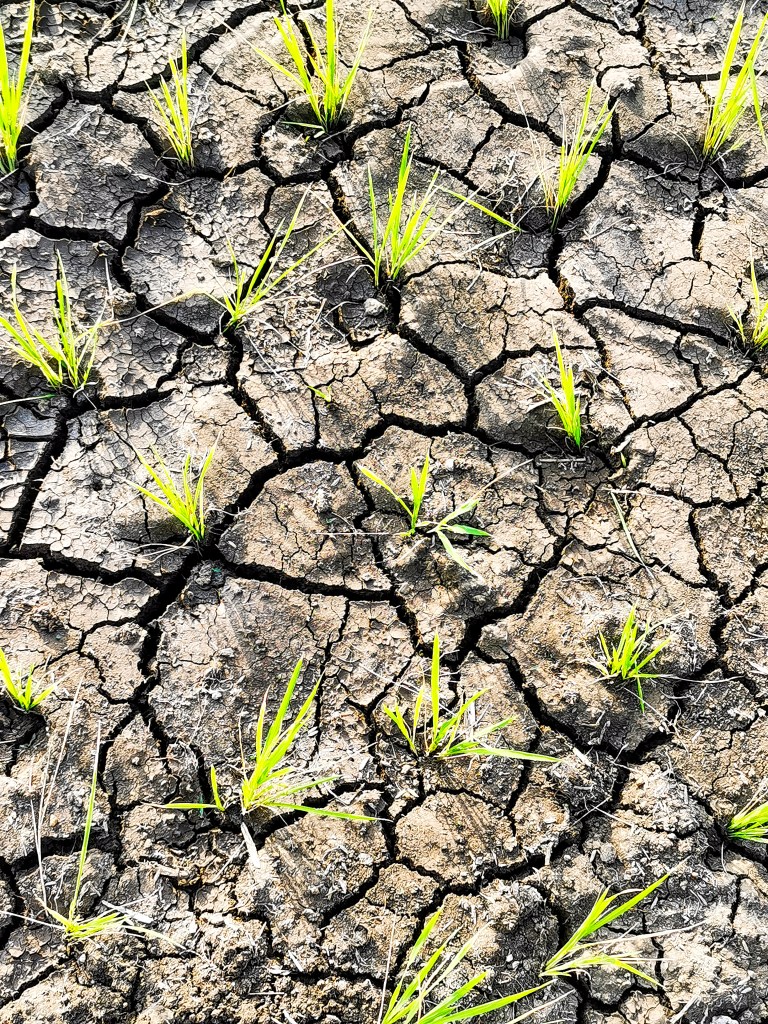
Vertisols, in general, exhibit distinctive features characterized by clay fractions containing smectites or montmorillonites, forming 2:1 layer lattice-type clays. Chemically, these soils are enriched with calcium and magnesium, although their concentrations may vary in different types of margalites, ranging from higher to lower levels based on origin and locations. Margalitic soils, developed from volcanic tuffs or limestone mixed with volcanic ash, tend to have lower calcium and magnesium contents.
Soil reactions within Vertisols typically range from slightly acidic to slightly basic, with the soil pH seldom decreasing below 6.5. At this slightly acidic range, the soils are referred to as acidic margalitic soils, often lacking CaCO3 concretions in the A horizons. Conversely, margalitic soils are generally deficient in phosphates and may also exhibit lower levels of potassium and nitrogen. Notably, soils derived from volcanic tuffs tend to contain higher amounts of phosphates and potassium compared to those originating from limestone.
The soils exhibit distinct characteristics, possess an exceptionally hard and impermeable nature when dry, and become sticky and plastic when wet, posing considerable challenges to plowing. Their weight and impermeability hinder water movement and aeration, leading to poor soil conditions. The pronounced shrinking and cracking further allow water to infiltrate the subsoil through the cracks, saturating deeper layers and prolonging moisture retention. Due to these unfavorable physical characteristics and low nutrient content, the soils are generally considered poor for agricultural purposes. Root development to deeper layers is hindered, and the formation of cracks can damage or impede root development. Cultivation becomes challenging due to the rock-hard consistency during the dry season and the slick and plastic nature in the wet season. Nevertheless, it is believed that cultivation becomes more feasible at a moisture content referred to as field capacity, where the soil exhibits an optimal consistency for plowing without detrimental structural damage.
Given the low nutrient content, particularly in phosphorus and potassium, it is imperative to apply adequate fertilizer to ensure optimal plant growth and crop yields in margalitic soils. These soils exhibit permanent cation-exchange capacities, and liming is not as effective in augmenting these capacities when compared to oxisols. Furthermore, the calcium and magnesium contents of margalitic soils are generally sufficient, and liming may only be necessary to counteract losses attributed to plant uptake and leaching.
The paramount challenge in rain-fed agriculture resides in the need to adapt to climate variability. The ‘green revolution,’ with its primary objective of enhancing crop yields through the reduction of crop diseases, application of pesticides, and supplementation of additional nutrients, has made strides in agricultural advancements. Nevertheless, the persistently low productivity observed in rain-fed agricultural systems is frequently attributed to compromised soil fertility and constraints in the availability of water and essential nutrients.
Satisfying the water requirements of plants necessitates a strategic combination of rain and irrigation, a practice particularly crucial in the context of paddy fields. In irrigated paddy fields, water is sourced from rivers, reservoirs, or ponds, ensuring a controlled and consistent supply. Conversely, rain-fed paddy fields exclusively rely on precipitation. The inherent challenge faced by rain-fed farmers lies in the potential for crop failure, stemming from inaccuracies in predicting rainfall, lack of crop varieties adaptable to the ecosystem, and insufficient capital among farmers, and characterizing this agro ecosystem as a resource-poor area. These underscores the inherent unpredictability associated with water availability in rain-fed agricultural systems.
During times of hardship, locally known as the season of paceklik, drought-resistant crops are preferred. In the cultivation of nonirrigated fields, farmers employ the golan method, creating large holes where crops like cassava and corn are planted. This method involves lifting and placing the block of soil on the side of the pit, allowing it to gradually crumble. The hole is then filled with compost, litter mixed with manure, and the crumbled soil material. This localized approach, known as the golan method, has proven effective for many farmers in coping with the challenges of cultivating these challenging soils.
Mitigating infertility in rain-fed paddy fields requires the implementation of Integrated Crop Management strategies, encompassing effective fertilizer management through location-specific nutrient management technology. Additionally, adopting alternative practices such as mulching can play a pivotal role in minimizing evaporation, preventing erosion, and curbing weed infestation. These measures hold the potential to enhance overall crop yield and optimize water-use efficiency in rain-fed agricultural systems.
Despite the potential promise evident in the introduction of drought-tolerant crops and the impacts of CO2 fertilization for improving yields and mitigating vulnerabilities to climate variations, persistent challenges such as regional crop failures and food shortages remain. It is imperative to underscore that the implementation of sustainable agricultural practices remains pivotal for ensuring the resilience and sustained productivity of rain-fed agriculture in the lowland Vertisols of Sukoharjo.
 Sanctum Harangan