A comprehensive understanding of waste management is crucial for reducing the accumulation of untreated cow and goat manure, while simultaneously facilitating enhanced agricultural inputs. Implementing effective waste management systems is essential to ensure the well-being of both farmers and the environment.
I was involved in a notable project conducted in Bantul, the Special Region of Yogyakarta. Our focus was on empowering a Women Farmer Group to oversee livestock management within the village, from handling to the final stages. Limited knowledge has led to unprocessed animal waste, highlighting the necessity of proper waste management education.
As the demand for fertilizers continues to rise, it’s imperative to find sustainable solutions. The escalating cost of chemical fertilizers makes it inaccessible to many farmers. Through the implementation of composting practices, we aim to alleviate the waste accumulation and enable farmers to create their own sustainable fertilizer.
Research has indicated that the use of organic fertilizers not only boosts productivity but also streamlines the production process, outperforming chemical alternatives. Organic fertilizers provide a sustained source of nutrients, releasing them gradually during decomposition. Furthermore, they enhance soil structure, improving water retention and nutrient absorption capabilities.
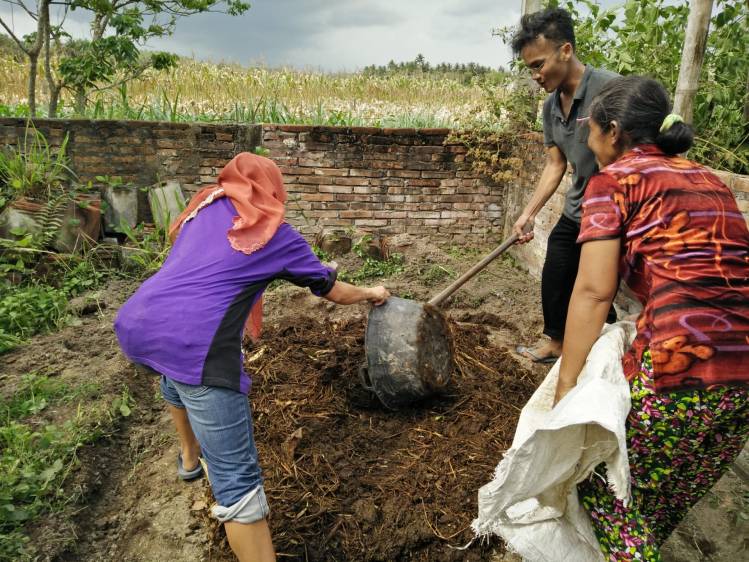
During our comprehensive training program, the Women Farmer Group participated in both classroom and field exercises, allowing for a deeper understanding of the processes involved. By breaking down into smaller groups, we ensured that every farmer gained a comprehensive grasp of the methods employed, fostering empowerment within the community.
 Sanctum Harangan